HaptiData

1,028 sensing points, worn like clothing.

Piezo-resistive fabric shells for the torso, both hands and both feet, ≤2.33 mm thick, folding to under a 0.2 mm radius, rated for 200,000 cycles at 3 MPa. The board streams a raw 8-bit, 256-point array plus a quaternion at up to 100 Hz over serial. No proprietary SDK between you and the data.

HaptiData fabric tactile skin, with patterns ready for the Unitree G1, Songyan N2 and Zerozero H1

Sheet, G1
1126 × 667 mm
Mass
302.4 g
Link
USB 3.0, Bluetooth LE
Array
256 cells, 8 bit
16 × 16 array, frame 0xAA550399100 Hz
Peak ADC
0
Contact cells
0
Centroid row, column
0

Rendered from the real protocol shape: 128 bytes in packet 1, 128 bytes in packet 2, 8-bit per cell. Every cell you see maps to an index the software reports.

  • 0.01 Nresolution per point
  • 350 Nmax mean per point
  • <0.2 msresponse time
  • ±8%repeatability
  • IP21−20…60 °C, 48 mA

Hardware: three form factors, one array format

Shells are cut and sewn to a specific robot’s outer geometry, then worn over it. Same electronics, same 256-cell frame, whichever body part you put them on.

Form factorSensing pointsCoverageNotes
Torso shellwhole-body, WB 464 / 339 / 304 Chest 208 × 188 mm, back 208 × 180 mm, arms 335 × 51 mm (G1 pattern) 1126 × 667 mm sheet, 302.4 g. Grid pitch 17 × 8.4 mm on the chest, 20 × 11 mm across the back.
Tactile gloveLH for the left hand, RH for the right 162 Fingers and palm, per hand Twelve pressure cells per finger plus palm coverage, and five knuckle-bend channels per hand for grasp pose.
InsoleLF for the left foot, RF for the right 120 Full plantar surface, per foot Fixed with 3M double-sided film; run it bare on lab carpet or inside the robot’s own shoe.
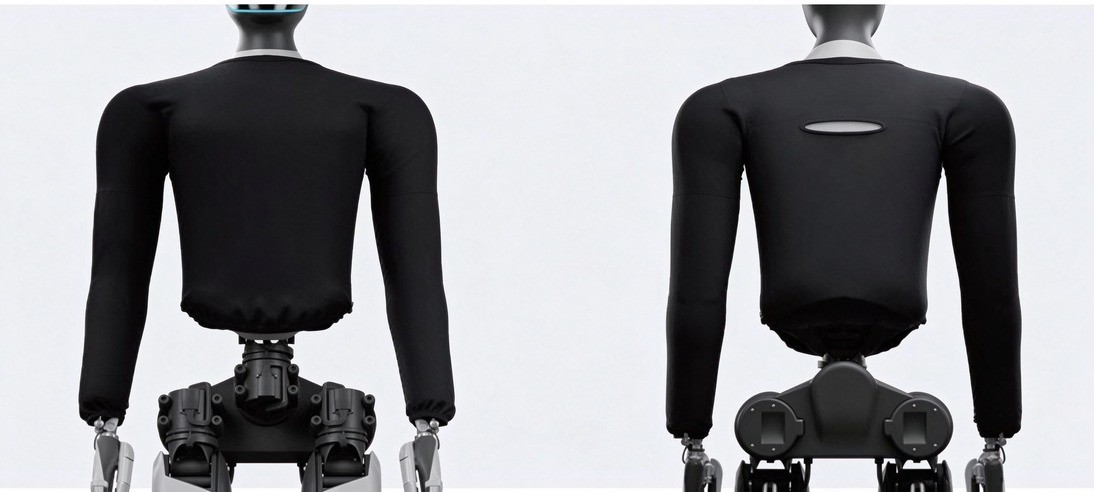
Black fabric tactile torso shell worn on a humanoid robot, front and back
Torso shell on G1464 pts
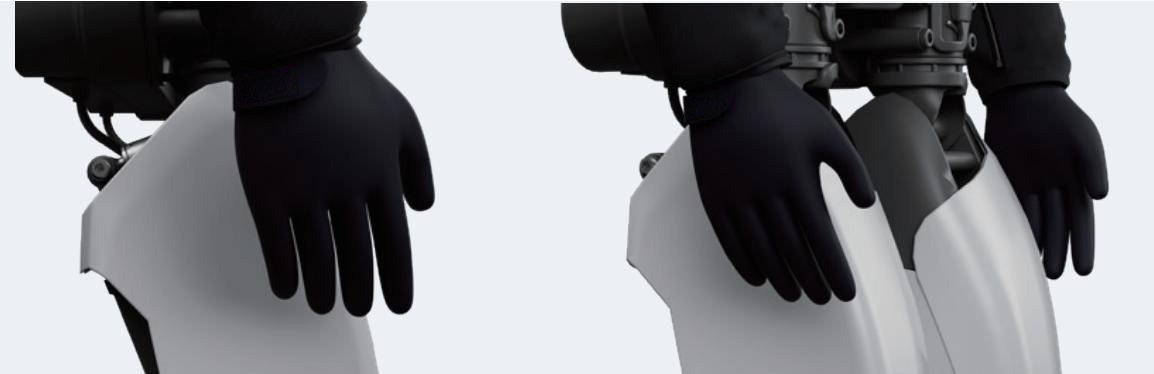
Fabric tactile gloves on a humanoid robot’s hands
Glove pair162 × 2
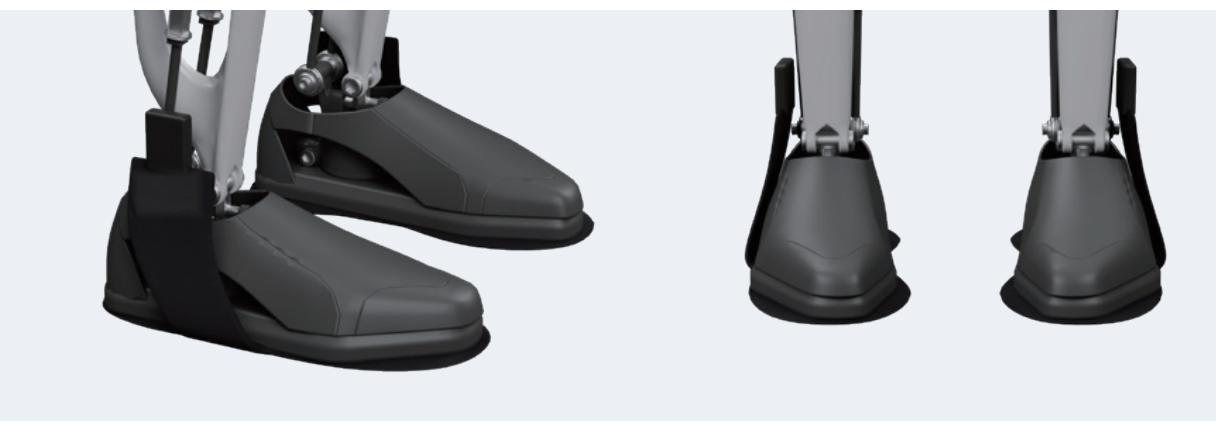
Fabric pressure insoles fitted under a humanoid robot’s feet
Insoles120 × 2

Which humanoid platforms fit today

Existing patterns cover three humanoid platforms; anything else is cut from your shell geometry during integration.

Unitree
G1
torso 464, gloves 162 × 2, insoles 120 × 2
Songyan Robot
N2
torso 339, gloves 162 × 2, insoles 120 × 2
Zerozero
H1 (wheel-legged)
torso 304, gloves 162 × 2

Detail per component: tactile skin for the Unitree G1, tactile data gloves and Shroom software.

Signal chain: five links, fully documented

From fabric to a frame you can parse in an afternoon. Five links, all documented. The serial port is open, no locked-down middleware, no cloud round-trip before you get numbers.

  1. 01Piezo-resistive fabric

    Woven sensor sheet, black textile face, ≤2.33 mm thick. Flexible enough for Z-fold and crumple, consistent to ±8%, and it self-recovers after impact without recalibration.

    Thickness ≤2.33 mm
    Durability 200k @ 3 MPa
    IP 21
  2. 02Acquisition board

    ESP32-class controller with an on-board battery, sampling the 256-cell matrix and the IMU. Bluetooth mode runs 3.75 h on a charge, standby a week; wired mode is powered by the host.

    Supply 3.5 to 5.0 V
    Current 48 mA
    Battery 3.7 V / 300 mAh
  3. 03Receiver or USB serial

    A paired receiver (13.2 g, Type-C for charging, data and firmware) or a direct 2 m USB 3.0 → Type-C lead through the hub. Same baud rate either way.

    Link 921,600 bps
    Bluetooth 30 Hz
    Wired 100 Hz
  4. 04IMU

    TDK InvenSense ICM-42688: 3-axis gyro (±15.6…±2000 °/s) and 3-axis accelerometer (±2…16 g), 16-bit, delivered as q0 to q3 in the second packet.

    Model ICM-42688
    Output quaternion
    Rate matches frame
  5. 05Your stack, or ours

    Read the frames directly into ROS, Python or your own logger, or run the shipped desktop tool for visualisation, recording and CSV export.

    Export CSV
    Views 3D / 2D / matrix
    Mode live or replay
frame  0xAA 0x55 0x03 0x99        // header, fixed
order  0x01 | 0x02              // packet 1 | packet 2
type   0x01 LH  0x02 RH  0x03 LF  0x04 RF  0x05 WB
pkt 1  128 × uint8              // cells 1 to 128
pkt 2  128 × uint8 + 16 × uint16 // cells 129 to 256, then q0 to q3

// per-cell value 0 to 255 maps to the point's ADC output;
// 0.01 N resolution, 350 N max mean range per point.

Software: from raw frames to a dataset

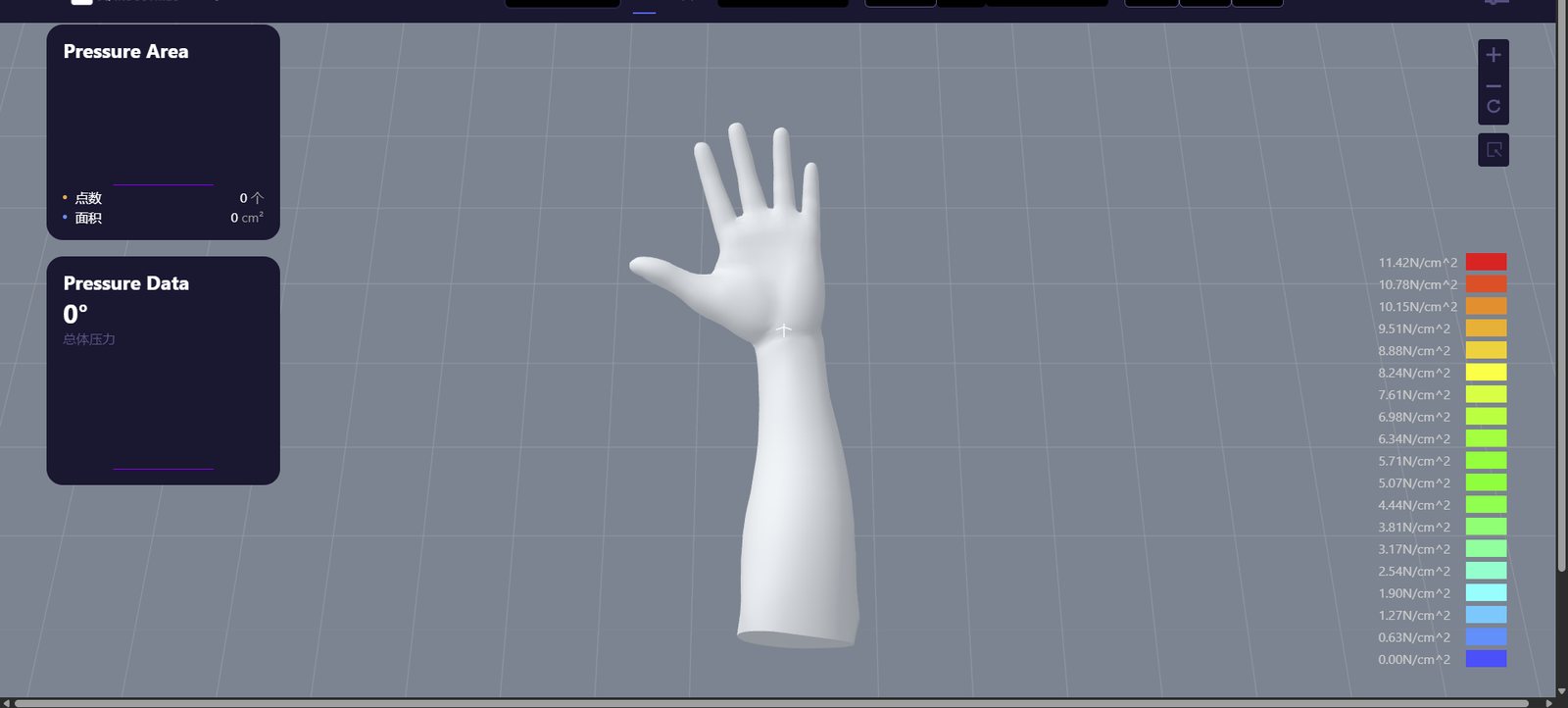
The part that makes a demo into a dataset. Shroom ships with every kit: live pressure on a 3D body model, recording, replay and CSV. It needs a licence key and an internet connection, it is the one closed piece in the chain, and we handle the keys.

Desktop software showing a 3D hand model with a pressure colour scale
Live 3D view · gloveHaptiData build
  • Pressure distribution in 3D, 2D and raw matrix views, switchable per session.
  • Record, store and replay sequences; export the raw arrays as CSV.
  • Pressure area and total load readouts, centre-of-pressure marker.
  • Zone selection, box a region and read only that region’s numbers.
  • Multiple sensor sets on one machine; left/right hand, both feet, whole body.
  • Chinese and English UI; Windows 8+ and macOS.
  • Custom work available: swapped body models and 3D meshes for your own robot, custom centre-of-pressure logic.
Licensing

Licences are per workstation, annual, keyed and issued by us on delivery. If your own team would rather take the stream, the serial protocol above is enough, we will help you bring it up.

Integration: four stages to a qualified shell

Four stages, from a robot we have never seen to a qualified shell. Nothing here is off-the-shelf when your platform is not one of the three above. We quote each stage separately so you can stop after the pilot.

Stage 01Fit survey

We take your shell geometry, CAD if you have it, measured sections if you do not, and mark the sensing zones that matter for your task.

Output: zone map + point budget

Stage 02Pattern & sample

Pattern cut to your geometry, one sample shell built and run against a known load to check repeatability and coverage.

Output: sample unit + test record

Stage 03Pilot unit

Instrumented unit on your robot, streamed into your stack or ours, with the calibration procedure handed over in writing.

Output: pilot kit + procedure

Stage 04Volume & spares

Repeat builds against the frozen pattern, with spare gloves and insoles held because those are what wear out first.

Output: supply schedule

Applications: where a fabric skin earns its place

One hardware set, four jobs. The difference between them is which body parts you instrument and what clock the data lands on.

Data captureTeleoperation and imitation-learning datasets

Contact is recorded as it happens, torso 464 points, gloves 162 per hand, insoles 120 per foot, on one 100 Hz serial stream beside joint states. A demonstration then carries force and location, not just pose.

ResearchContact-rich manipulation

162 points per glove with five knuckle-bend channels, 0.01 N resolution per point and a 350 N mean range, so grasp onset, slip and load share are separable in the log.

SafetyHuman and robot interaction

The shell reports where contact began and how hard, before a joint limit is reached, useful when the robot works next to people rather than behind a fence.

LocomotionGait, balance and foot pressure

120 points per insole, fixed with 3M film, run bare on lab carpet or inside the robot’s own shoe. Centre of pressure and per-zone load come out of the same array.

What you can buy, and how it is quoted

Hardware, engineering, software and spares are quoted separately, configurations differ too much between platforms for a list price to be honest.

HardwareShell kits

Torso, glove and insole sets with board, battery, receiver, hub and cabling. Configured to your platform; quantity quoted per order.

per unit, MOQ by configuration

EngineeringFit adaptation

Pattern work for a platform that is not pre-supported, including sample builds and the repeatability record that goes with them.

fixed-scope NRE

SoftwareShroom seats

Annual per-workstation licences, issued at delivery, renewable. Site licences for labs running several robots.

annual, per seat

ServiceCalibration & requalification

Annual check against a reference load, with a signed record, the thing your quality system will ask for.

annual

ServiceSpares & consumables

Gloves and insoles take the wear. We hold stock so a torn glove does not idle a robot for a month.

stock held, per unit

PilotData-collection run

A fixed-scope session on your robot: we instrument, capture, label and hand back arrays plus a short read-out of what the data can support.

fixed scope, per session

FAQ

Are these your own sensors?

The sensing fabric is engineered and supplied by HaptiData, whose wordmark appears on the shells. We qualify the fit, adapt patterns, run pilot units, issue software licences and hold spares, and every shell arrives under our one-year limited warranty.

What does a set cost, and what is the minimum order?

Quoted per configuration. A G1 kit and a custom torso for an unlisted platform are different builds, and a list price would mislead on both. Send the platform, the coverage you want and whether it is a pilot or a volume order, and you get a line-item quote.

Can we read the data without your software?

Yes. Frames arrive on an open serial port at 921,600 bps: 8-bit cells in two packets plus a quaternion, with a fixed header and a sensor-type byte. Bring it into ROS or Python directly. The desktop tool is for visualisation, recording and CSV, not for access control.

Does the software need internet?

Yes, the licence check runs online, and it will not start behind a VPN. If your lab is air-gapped, say so at quote time and we will discuss what is possible.

How long does a non-standard platform take?

Driven by the fit survey and the sample build, so it is quoted stage by stage rather than promised as one number. You can stop after any stage.

What wears out first?

Gloves and insoles. The sheet itself is rated for 200,000 cycles at 3 MPa and recovers without recalibration, but the sewn seams and the adhesive film on the insoles are the practical service items, which is why we keep them in stock.
Tell us the robot and the coverage. We will quote the stages.

Include the platform, which body parts you want instrumented, whether you are buying a pilot or a fleet, and your timeline. If you already have a task in mind, grasp force, contact logging, balance, say which; it changes the point budget.

[email protected]
Supply & integration
HaptiData, haptidata.com
Coverage
Outside mainland China
Manufacturing
HaptiData
Quote back
Within 2 business days
Sample shell
4 weeks from fit survey
Volume
10 weeks from pattern sign-off
Warranty
One year limited, from delivery